
My Kid Had One Friend for Three Years. I Finally Figured Out Why.
My Kid Had One Friend for Three Years. I Finally Figured Out Why.
It wasn't shyness. It wasn't his personality. It was one specific thing nobody ever taught him, and I didn't know it existed until I stumbled onto it by accident.

By Daniel Hartwell
Stay Silent parent reader | Updated September 2026 | 6 min read
I found out my son ate lunch alone when I asked him who he sat with.
He said "just me." Then shrugged like it was normal.
He was 13.
I told myself it was a phase. That some kids are quieter than others. That he'd find his people eventually. I told myself the things parents say when they don't know what else to do.
What I didn't say out loud: I ate alone too. Not at 13. At 14, 15, 16. A tray in my hands and nowhere to go. I'd find a corner and face the wall so nobody could see I didn't have a table. I did that for two years before I just stopped trying.
I thought I'd grown out of it. I hadn't. I'd just gotten older.
The Pattern I Finally Noticed
I started paying closer attention.
Not to how many friends he had. I already knew that number. I started watching what happened in actual conversations.
He would talk to someone. It would go fine for the first minute. Then it would die. The other kid would drift off. My son would stand there not sure what just happened.
I kept seeing the same thing. He wasn't unfriendly. People didn't dislike him. The conversation just stopped, and he didn't know how to keep it going.
I thought about myself at 14. Same pattern exactly. I could start a conversation. I just never knew what to do once it started. It would get to a point and then go flat, and I'd feel that flat feeling and not know why, and the other person would find somewhere else to be.
I used to think I just wasn't interesting enough. Wasn't funny enough. Wasn't the kind of person people wanted to be around. I carried that for decades.
What I understand now is that it was never about being interesting. It was about one specific thing that happens inside a conversation. Something most kids never get taught, something most adults never get taught either. And once you see it, you can't unsee it.
What Nobody Actually Teaches
Think about how we teach kids social skills.
We tell them to be friendly. To smile. To ask questions. To be themselves. Maybe we tell them to join clubs or activities so they can meet people with similar interests.
What we don't teach is what happens inside the conversation itself.
Specifically: what to do in the three seconds after someone finishes talking.
That moment, that tiny gap, is where most friendships either start forming or start dying. And almost nobody handles it well. Not because they're not trying. Because nobody showed them the mechanics.
The kids who seem naturally social aren't wired differently. They picked up these mechanics somewhere, usually early, usually by watching someone close to them who had it. The kids who didn't pick it up spend years trying to figure out why conversations keep going flat.
Nothing is wrong with those kids. They just never got handed the thing.
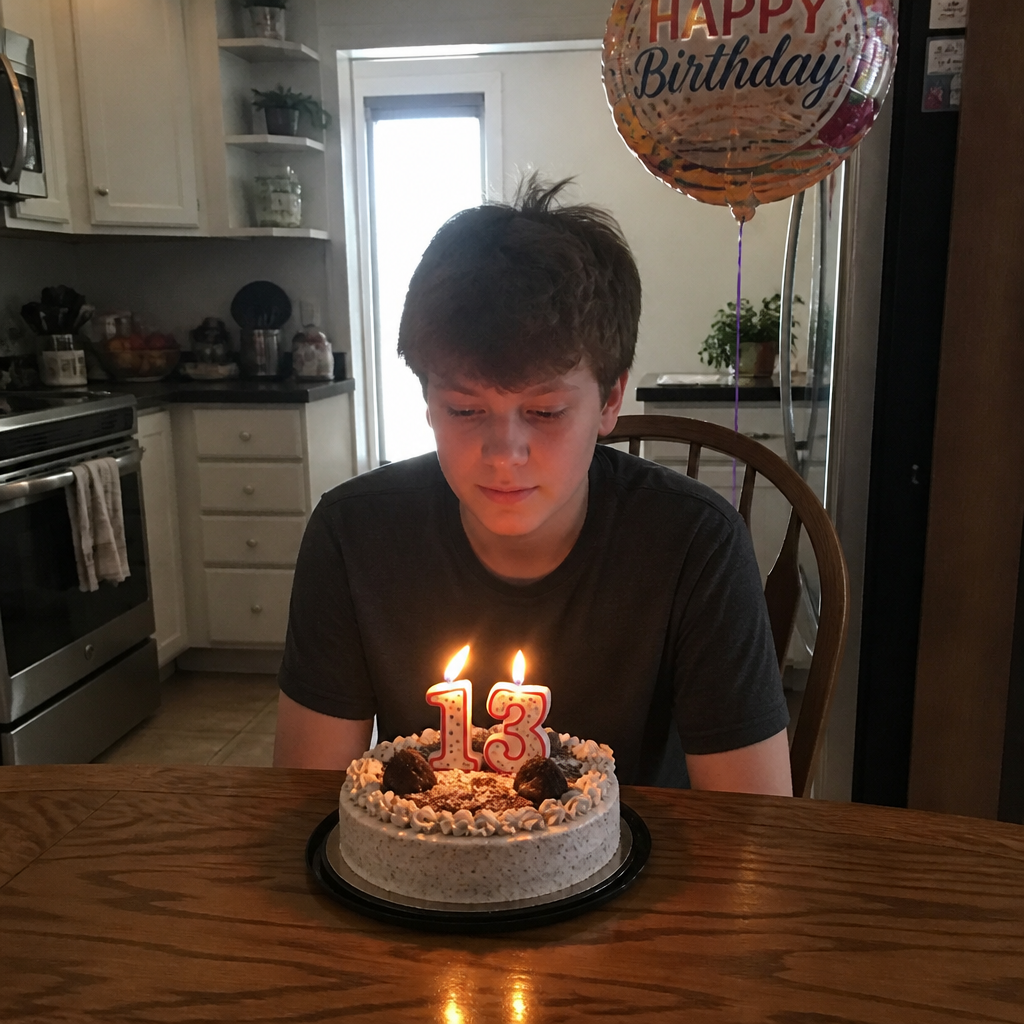
And the longer it goes on, the more the pattern becomes normal to them. The lunch table. The weekend at home. The birthday with nobody to invite. Each one a little easier to explain away. Until they stop expecting anything different.
That's the part that stays with me.
He wasn't unfriendly. People didn't dislike him. The conversation just stopped, and he didn't know how to keep it going.
He could start a conversation. He just never knew what to do once it started. Same pattern I had at 14, exactly.
The lunch table. The weekend at home. The birthday with nobody to invite. Each one a little easier to explain away.
How I Found It
A friend sent me a book about six months ago. It was called Stay Silent: A 30-Day Challenge to Transform the Way You Speak.
I almost put it down after the first chapter. I picked it up because I'd been having trouble in work meetings. Constantly getting talked over, losing the thread of conversations at the wrong moment. Work stuff, I thought.
About thirty pages in, I stopped and read a section twice.
It was about what happens right after someone finishes talking. What most people do. What the people who hold conversations together do instead. It named something I had been doing my entire life. Something I didn't know I was doing, something that was quietly killing every conversation right at the moment it could have become real.
I sat with that for a while.
Then I thought about my son.
I left the book on the kitchen counter. Didn't say anything about it. Didn't suggest he read it. Just left it there.
He picked it up two days later. Asked if he could take it to his room.

What Happened After
The change wasn't overnight. I want to be honest about that.
But about three weeks later he mentioned that two kids from his class had been hanging out with him after school.
He said it like it was nothing. Like it was just what happened now.
I didn't make a big deal of it. I just nodded and said that was good. But I sat with it later. The first time in three years he'd mentioned someone other than his one friend.
He didn't become a different person. He didn't suddenly turn into the social kid. He just got handed something he hadn't had before: the specific understanding of what keeps people engaged after the first exchange.
The questions that keep a conversation alive after the first exchange.
Instead of just letting it die.
How to make someone feel like you're actually there with them.
That's what Stay Silent teaches. Not confidence. Not "be yourself" motivation. The actual mechanics, written across 30 short daily chapters, most of which take about ten minutes to read.
My son finished it in three weeks. I read it again after.
"My daughter used to come home from school and go straight to her room. She's 15. About six weeks after I left this book where she could find it, she started texting a friend group I hadn't heard of before. I didn't say a word. She just figured something out."
Verified buyer"I bought it for my son. Then I read it before he did. I'm 51, been in sales for 20 years, and there were things in this book about conversation I genuinely didn't know I was missing. We ended up talking about it together. That conversation alone was worth the money."
Verified buyer"My kid came to me after finishing it and said it was actually really useful. That's the highest compliment I've gotten on a parenting decision in 16 years."
Verified buyer"My son is 14. He had one close friend for two years and spent most weekends at home. I left Stay Silent on the coffee table. He read it over two weeks. A month later he was getting invited to things. I don't know exactly what shifted but something did."
Verified buyer
Get Stay Silent Today
Stay Silent: A 30-Day Challenge to Transform the Way You Speak
$59.99 $32.99 Today
Every week without this is another week your kid tries to connect and walks away not knowing why it didn't work.
30-Day Money-Back Guarantee. Full refund if it doesn't help.
Questions Parents Usually Ask
Both read it and both take something from it. The mechanics of conversation don't change by age. They're the same at 14 as they are at 50. Most adult buyers say they wish they'd had it at 14. Several parents and their kids end up reading it at the same time.
It's written in 30 short daily chapters. Most take under ten minutes. It reads closer to a conversation than a textbook. No academic language, no heavy theory. Many parents leave it out without saying anything and find their kid picks it up on their own.
It doesn't tell anyone to be more confident or to put themselves out there. It teaches specific mechanics: what to do in the pause after someone finishes talking, how to ask questions that keep a conversation alive, what most people do without knowing it that signals the conversation is over. Practical and specific, not motivational.
30-day money-back guarantee. Full refund. No complicated process.
$59.99 $32.99 Today
The skill gap doesn't fix itself. The good news is it doesn't take long to close.
30-Day Money-Back Guarantee. Full refund if it doesn't help.